
Craftsmanship That Embraces MaterialsOur Commitment to Charred Cedar Planks and Materials
J.Make products are upcycled creations made from scraps of precious natural materials originally intended for traditional Japanese gardens.
Japanese natural materials carry a uniquely organic warmth and are rich in characteristics nurtured by the local climates and landscapes where they originated.
We hope that more and more people will experience the magnificence of these materials in their everyday lives.
By fully preserving the natural texture and warmth of our materials, each product we create has its own one-of-a-kind look.
Our products are carefully crafted by skilled artisans to highlight the natural beauty and warmth of each material, delivering comfort and richness that seamlessly become a part of everyday living.
Charred Cedar Planks
Charred Cedar Planks from Shimane with an Expressive Texture Created by Double-Sided Burning and Relief Work
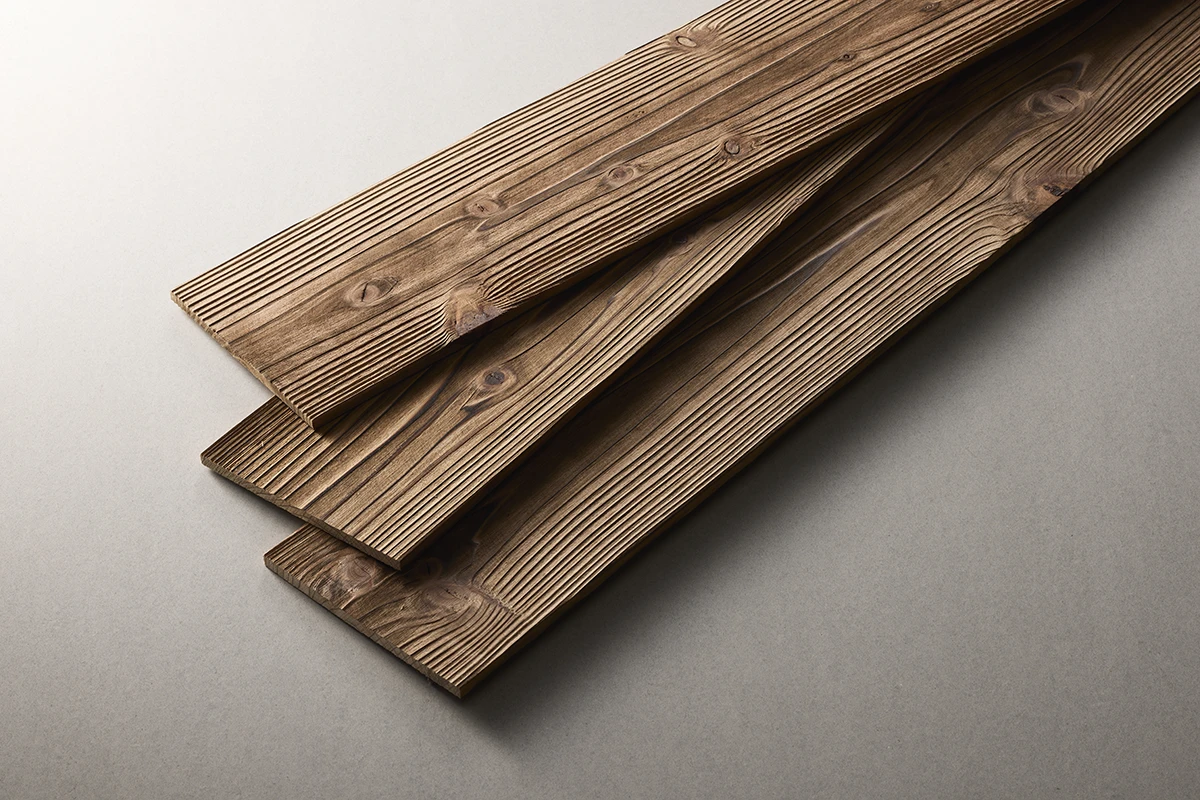
While most charred cedar planks are generally burned on one side, J.Make planks are specially made to be burned on both sides. When firing cedar planks, applying the right amount of char is extremely important, as excessive burning can result in the loss of moisture and lead to warping as well as cracking. This also applies when burning both sides of a cedar plank, which requires even greater attention to getting just the right amount of char.
Each plank is fired to carbonize its entire surface, enhancing durability and resistance to decay while accentuating the wood’s grain patterns. This results in tasteful charred cedar planks used in products that accompany people in their everyday lives, including boxes that serve as bases for our HAKONIWA products and our Yakisugitana boxes, which are perfect for storage as well as interior decoration. Each piece is carefully finished by hand by skilled artisans.
Kishu Ornamental Stones
Rare River Stones Exclusively Collected During Work to Improve the Kinokawa River
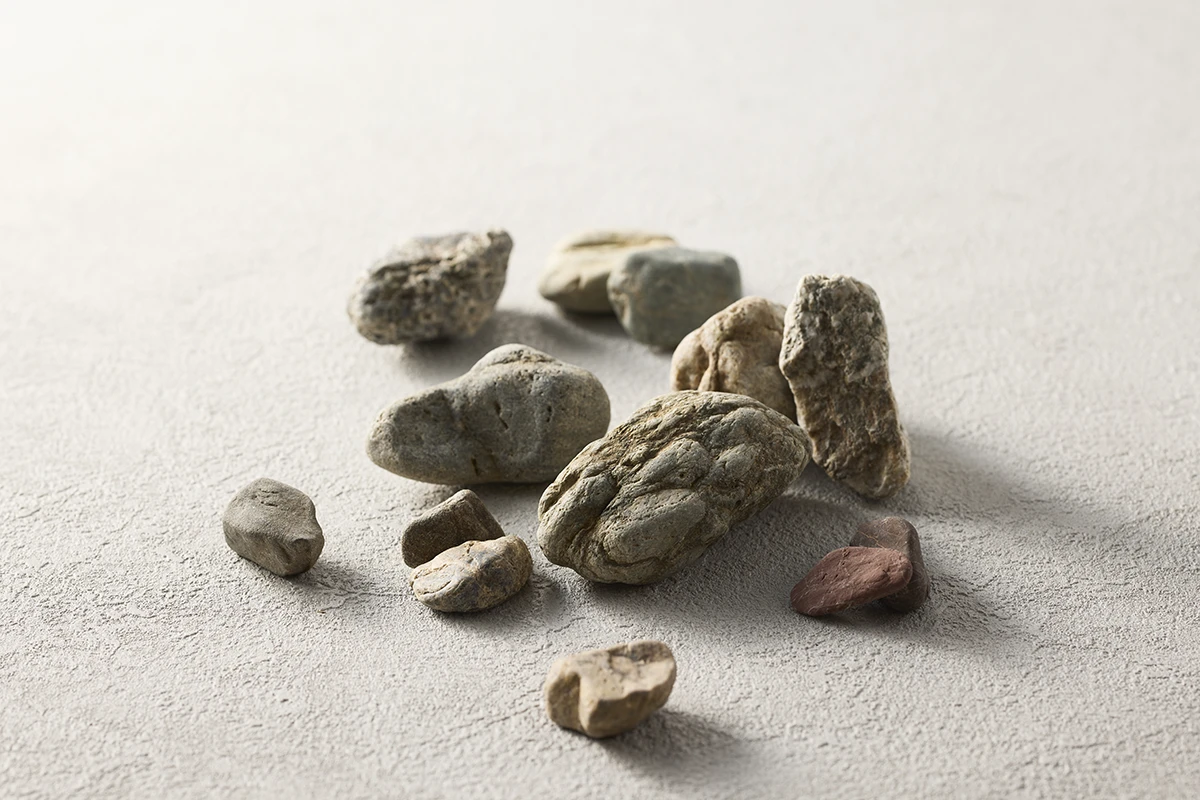
As ornamental elements for our HAKONIWA, we use rare, carefully selected river stones (Kishu gravel), which have been collected only during work to improve the Kinokawa River, a Class A river that flows from Mount Odaigahara in Nara Prefecture to the Kii Channel in Wakayama Prefecture. These ornamental stones are selected for gardens for their textural variety, richly natural expressions, and subdued colors. They also carry a weightiness as elements that enhance dignity and elegance, making them the perfect centerpiece for any garden.
Kishu ornamental stones are collected during river improvement projects, so they come in a variety of shapes as well as sizes, and no two are alike. Their rich expressive qualities have been shaped by nature, making them an important material that adds a gentle charm to HAKONIWA products.
Black Bamboo
Natural Bamboo Collected from Wakayama Prefecture
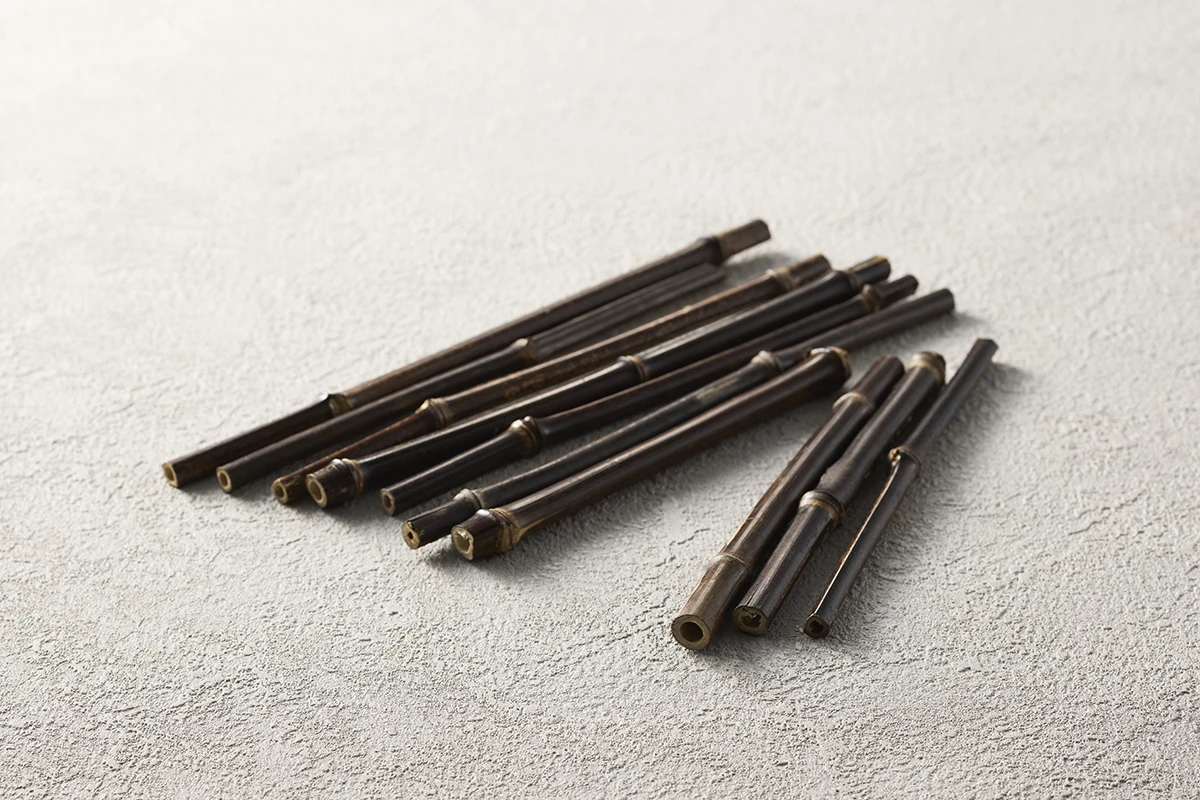
Our bamboo material begins as green bamboo that deepens to a rich black over a period of about three years. When harvested, the black bamboo will have a slight bend at its nodes, and this is corrected by gently firing the bamboo while using a specialized stick to straighten it. Firing removes excess oils, resulting in beautiful black bamboo with a sleek sheen.
Scrap pieces of black bamboo produced during the crafting of bamboo picket fences are carefully dried and processed over time for use as materials for HAKONIWA. Using time, effort, and skilled craftsmanship, our all-natural black bamboo is polished to bring it to life as a decorative material that adds sophistication and depth to any interior space.
Kishu Binchotan
Charcoal Sourced from Ubame Oak Trees Grown Over Long Periods of Time in the Rich Nature of Wakayama Prefecture
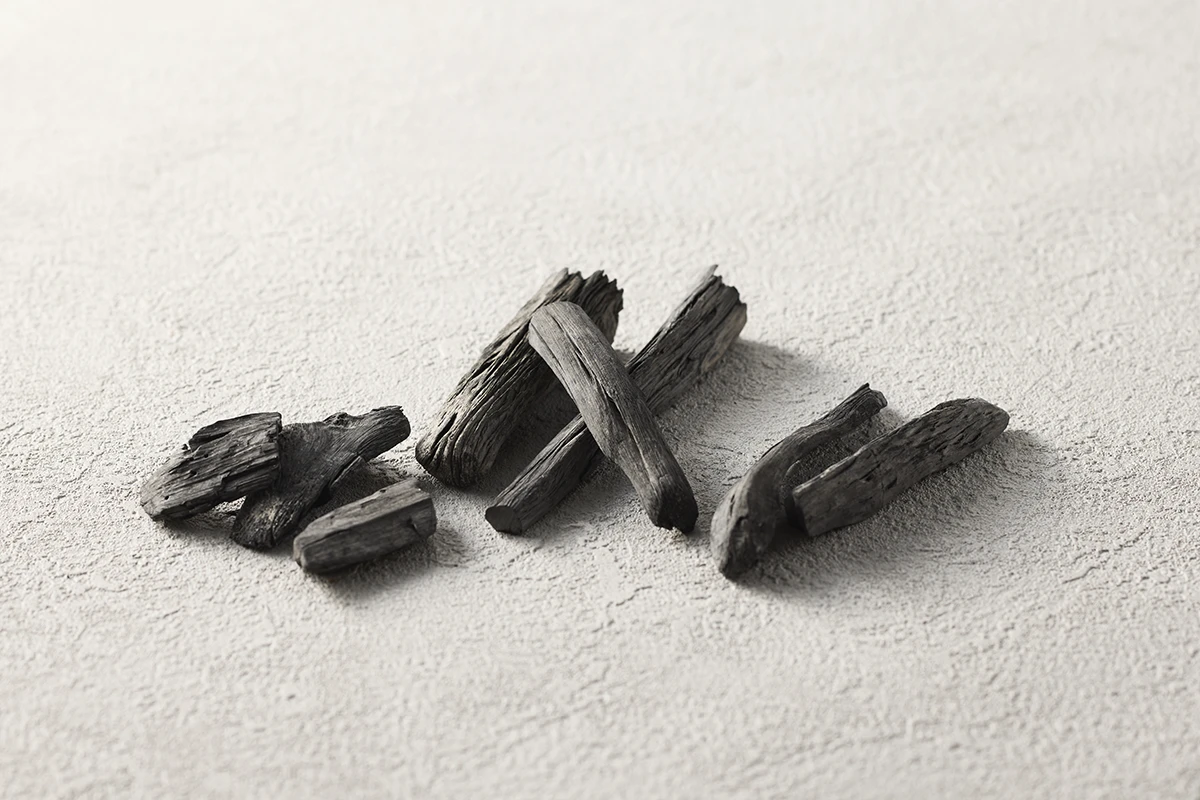
Kishu Binchotan charcoal is carefully heat-treated charcoal made from Ubame oak logs that have matured over many years in the rich natural environment of Wakayama Prefecture’s mountains. Currently, this material has become extremely valuable due to insufficient reforestation efforts. Once removed from the kiln, the charcoal is rapidly cooled in a mixture of sand and ash, resulting in the white surface that gives it its common name, “white charcoal.” Its countless microscopic pores also allow air to pass through, which is why it’s also known for its deodorizing properties.
Using Kishu Binchotan as a part of our HAKONIWA products can add a calm touch and refined elegance that only natural materials can provide. This allows you to experience the uniquely elegant beauty of Japanese nature within a miniature landscape.
In addition to these items, we also put our hearts and souls into creating products from other precious materials used to adorn traditional Japanese gardens.
